
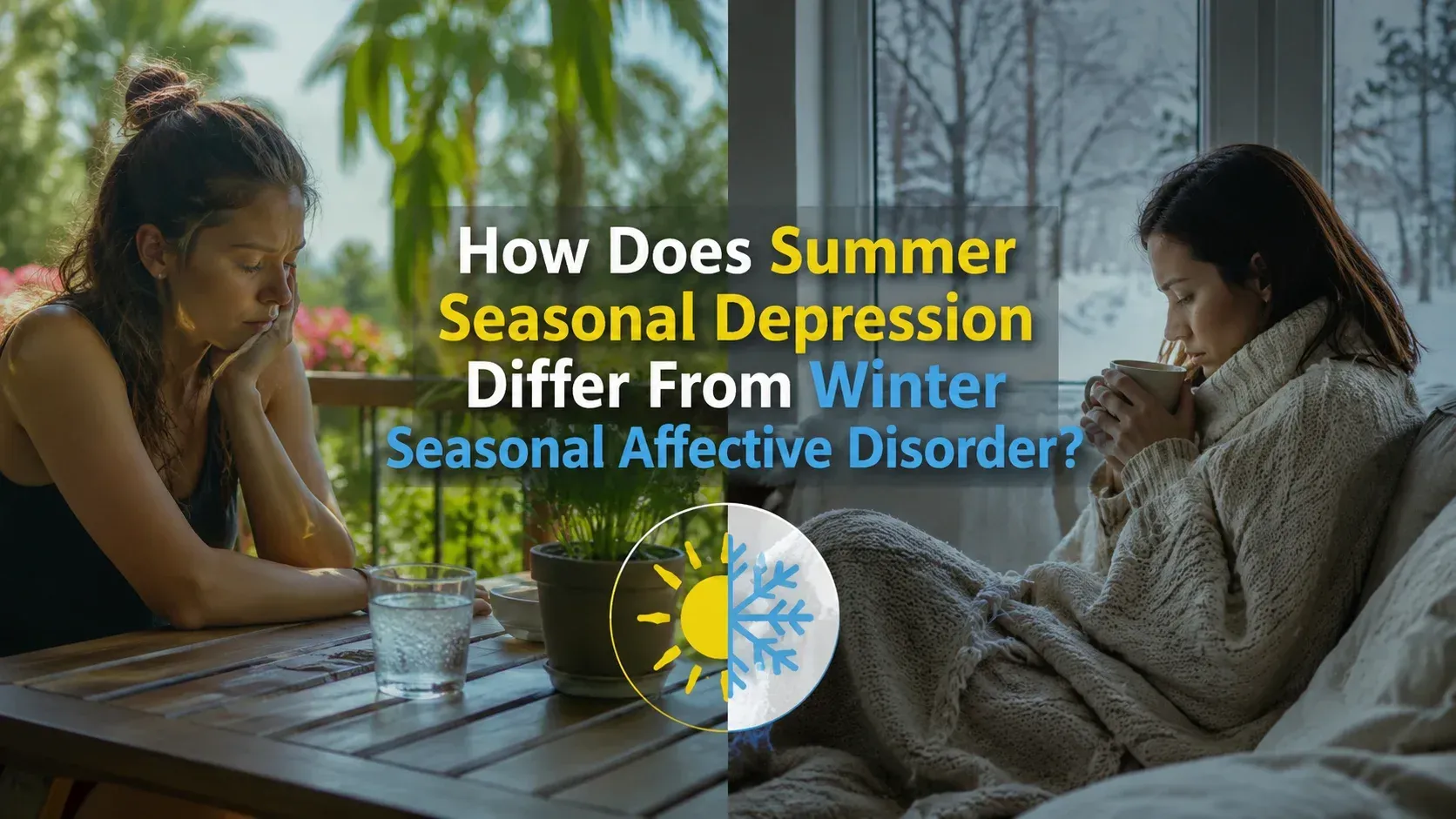
How Does Summer Seasonal Depression Differ From Winter Seasonal Affective Disorder?

Table of Contents
- Introduction
- What Is Seasonal Affective Disorder?
- How Winter SAD Develops
- How Summer Seasonal Depression Develops
- Key Differences Between Summer and Winter Seasonal Depression
- Shared Symptoms and Overlapping Patterns
- What Might Be Triggering Your Symptoms
- When to Consider Talking to a Therapist
- Conclusion
- Summary
- Frequently Asked Questions
Key Takeaways
- Summer seasonal depression and winter SAD are both forms of seasonal affective disorder, but they involve different symptoms, triggers, and timing.
- Winter SAD is linked to reduced sunlight, while summer seasonal depression is often tied to heat, humidity, and disrupted sleep patterns.
- Symptoms of summer depression can include agitation, appetite loss, and insomnia, which are the opposite of common winter symptoms like fatigue and overeating.
- Both conditions follow a seasonal pattern and typically improve when the season changes, but that does not mean they should be ignored.
- A licensed therapist can help identify whether mood changes are tied to seasonal patterns or something else entirely.
Introduction
Summer seasonal depression differs from winter Seasonal Affective Disorder mainly in what triggers it and how it shows up. Winter SAD tends to bring fatigue, oversleeping, and carbohydrate cravings, while summer seasonal depression is more often linked to agitation, poor appetite, and trouble sleeping.
For people living in Norman, OK, where summers bring long stretches of heat and humidity, these mood shifts are worth understanding rather than brushing off as "just the weather." Seasonal mood changes are a recognized pattern in mental health, and knowing the difference between the two types can help someone decide whether what they're feeling is temporary discomfort or something that could benefit from depression therapy.
This article breaks down how each type develops, what makes them different, and what questions are worth asking if the pattern repeats every year.
What Is Seasonal Affective Disorder?
Seasonal Affective Disorder, or SAD, is a type of depression connected to changes in season. It is not a separate diagnosis in most clinical manuals. Instead, it is considered a subtype of major depressive disorder with a seasonal pattern.
Most people associate SAD with winter, since that version has been studied longer and tends to be more common. But a smaller percentage of people experience a similar pattern in reverse, with symptoms appearing in late spring or summer and easing off once temperatures drop.
Both versions share one core feature. The symptoms follow the calendar. They show up around the same time each year and tend to resolve once the season shifts again.
How Winter SAD Develops
Winter SAD is closely tied to reduced daylight. Shorter days and less sunlight exposure can affect the body's internal clock, known as the circadian rhythm. This can throw off sleep-wake cycles and reduce serotonin activity, a brain chemical connected to mood regulation.
Reduced light exposure is also linked to changes in melatonin production. Melatonin helps regulate sleep, and when the body produces too much or at the wrong times, it can contribute to the fatigue and low energy many people report in the winter months.
Common winter SAD symptoms include:
- Low energy and fatigue
- Oversleeping
- Increased appetite, often for carbohydrates
- Weight gain
- Social withdrawal
- Difficulty concentrating
How Summer Seasonal Depression Develops
Summer seasonal depression works differently. It is less understood than the winter version, but researchers point to a few likely contributors, including heat, humidity, and disrupted routines.
Longer daylight hours can interfere with sleep, especially for people sensitive to light in the evening. Heat and humidity can also make it harder to stay physically active or comfortable outdoors, which may affect mood over time.
Some people also experience increased anxiety or agitation during the summer months, which is a notable contrast to the low-energy presentation typical of winter SAD.
Common summer seasonal depression symptoms include:
- Poor appetite or weight loss
- Insomnia or restless sleep
- Agitation or irritability
- Increased anxiety
- Restlessness
- Difficulty relaxing
Key Differences Between Summer and Winter Seasonal Depression
The clearest difference between the two is the direction of the symptoms. Winter SAD tends to slow the body down. Summer seasonal depression tends to speed it up.
Energy levels
Winter SAD often brings fatigue and a desire to sleep more. Summer seasonal depression is more likely to bring restlessness and trouble sleeping.
Appetite changes
Winter SAD is associated with increased appetite and cravings for carbohydrates. Summer seasonal depression is more often linked to reduced appetite.
Mood presentation
Winter SAD symptoms can look more like classic depression, with low mood and withdrawal. Summer seasonal depression can look more like anxiety, with irritability and agitation layered in.
Likely triggers
Winter SAD is tied to reduced light exposure. Summer seasonal depression is more often tied to heat, humidity, and disrupted sleep patterns.
Because summer symptoms can resemble
anxiety therapy concerns more than typical depression, some people may not immediately connect their symptoms to a seasonal pattern
Shared Symptoms and Overlapping Patterns
Despite their differences, both conditions share some overlapping features. Both can involve low mood, difficulty concentrating, and a general sense of not feeling like oneself.
Both conditions are also cyclical. Symptoms tend to appear around the same time each year and often ease once the season changes. This repeating pattern is one of the more reliable signals that a mood change may be seasonal rather than unrelated to the time of year.
It's also worth noting that seasonal depression, in either form, exists on a spectrum. Some people notice mild shifts in mood or energy. Others experience symptoms significant enough to affect daily functioning, work, or relationships.
What Might Be Triggering Your Symptoms
A few factors are commonly associated with summer seasonal depression, though research is still developing in this area.
Heat sensitivity
Some people are more physically and emotionally affected by high temperatures than others.
Sleep disruption
Longer daylight hours and warmer nights can interfere with consistent, restful sleep.
Routine changes
Summer often brings shifts in schedule, whether from travel, kids being out of school, or altered work hours, which can affect stability and mood.
Body image or social pressure
Some individuals report increased self-consciousness during summer months, which can contribute to stress or low mood.
Understanding which of these factors might apply to a specific person's experience is part of what a mental health professional can help sort through, particularly when symptoms don't clearly fit one category.
When to Consider Talking to a Therapist
Not every mood dip needs professional support. Occasional irritability during a heat wave or a rough night of sleep is common and usually temporary.
It may be worth a conversation with a therapist if:
- Symptoms return at the same time each year
- Mood changes are interfering with work, relationships, or daily tasks
- Sleep or appetite changes are significant and persistent
- Anxiety or irritability feels harder to manage than in previous seasons
A therapist can help determine whether symptoms fit a seasonal pattern, overlap with another condition, or point to something separate from seasonal changes altogether. Approaches like those outlined in CBT and ACT options are sometimes used to help people build coping strategies suited to their specific symptoms.
Conclusion
Summer seasonal depression and winter SAD are related conditions, but they show up in nearly opposite ways. Winter SAD tends to bring fatigue, oversleeping, and increased appetite. Summer seasonal depression tends to bring restlessness, poor sleep, and reduced appetite, often paired with anxiety-like symptoms.
Both follow a seasonal pattern, and both can range from mild to more disruptive. Recognizing which pattern matches a person's experience is a useful first step toward understanding what might help, whether that's lifestyle adjustments, professional support, or simply knowing that the symptoms have a name and a pattern behind them.
Understanding these differences is not about self-diagnosing. It's about having enough information to ask informed questions, whether that's with a doctor, a therapist, or simply within one's own self-awareness.
Summary
This article is meant to provide general information about seasonal mood patterns, not to diagnose or replace a conversation with a licensed professional. If seasonal mood changes have been a recurring concern, it may help to speak with someone who can look at the full picture.
For residents in and around Norman,
contact us to learn more about scheduling a conversation. This is offered as an informational resource, without pressure or guarantees, to help support a clearer, more informed decision.
Frequently Asked Questions
Is summer seasonal depression a real diagnosis?
It is not a separate diagnosis on its own. It falls under the broader category of major depressive disorder with a seasonal pattern, which can occur in summer or winter.
Why do some people feel worse in summer instead of winter?
Researchers believe heat, humidity, longer daylight hours, and disrupted sleep may play a role, though the exact causes are still being studied.
Can someone experience both summer and winter seasonal depression?
It is uncommon but not impossible. Most people with a seasonal pattern experience symptoms in one season, though sensitivity to both can occur.
How long does summer seasonal depression usually last?
Symptoms typically align with the warmer months and tend to ease as the season changes, though duration varies by individual.
Is summer seasonal depression the same as general anxiety?
They can share symptoms like restlessness and irritability, but seasonal depression follows a yearly pattern tied to a specific time of year, while general anxiety may not be seasonal at all.